Public Test Results
Share, collaborate, inform and alert like never before
May 13, 2020

Why would you want your test results data to be public? We didn't think there was any good reason and that is why Tesults has never made it possible to make test results public. In fact, we've taken the opposite approach, to bolstering security and privacy with encryption at rest and in transit and even making it possible for some teams to 'bring their own encryption keys' for added security. However based on feedback it seems clear now that there is a desire for some teams to make their test results data available publicly. For example, open-source software providers have public code repositories and they also want their test results data to be public.
Tesults is rolling out a phased approach to allowing teams to choose to make data public. We will add more collaborative features and more convenient sharing mechanisms over time, but as of now you can make your test results data public should you wish to. By default all new projects will be private, you must enable public access, at three different scope levels.
Here's how to do it. First head to the configuration menu at https://www.tesults.com/config
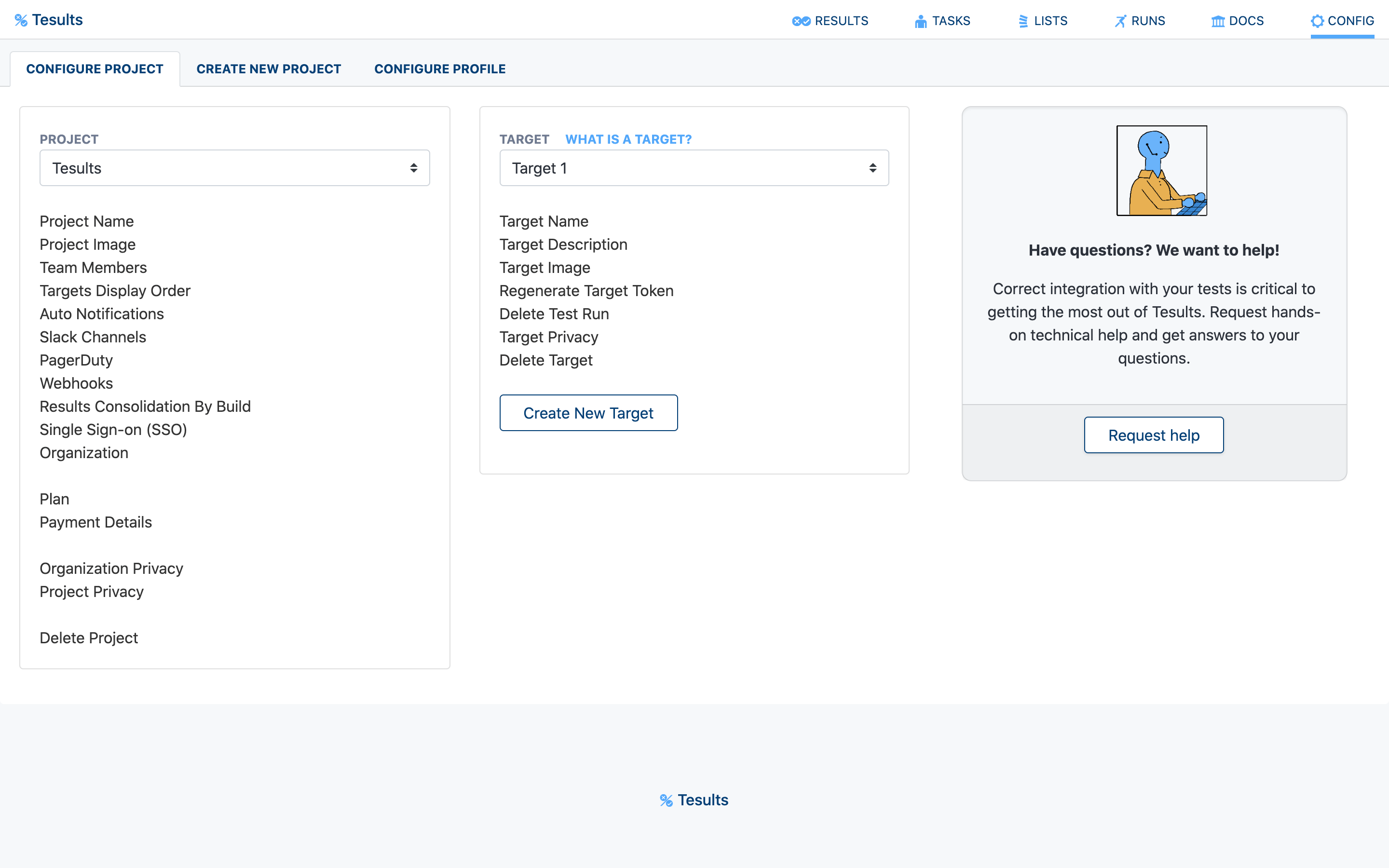
Ensure the project for which you want to make some or all target test results data public is selected from the dropdown list. In this case the project is called Tesults.
Next click on Organization Privacy. If you have not named your organization yet, you can name it. In this case the organization is also called Tesults.
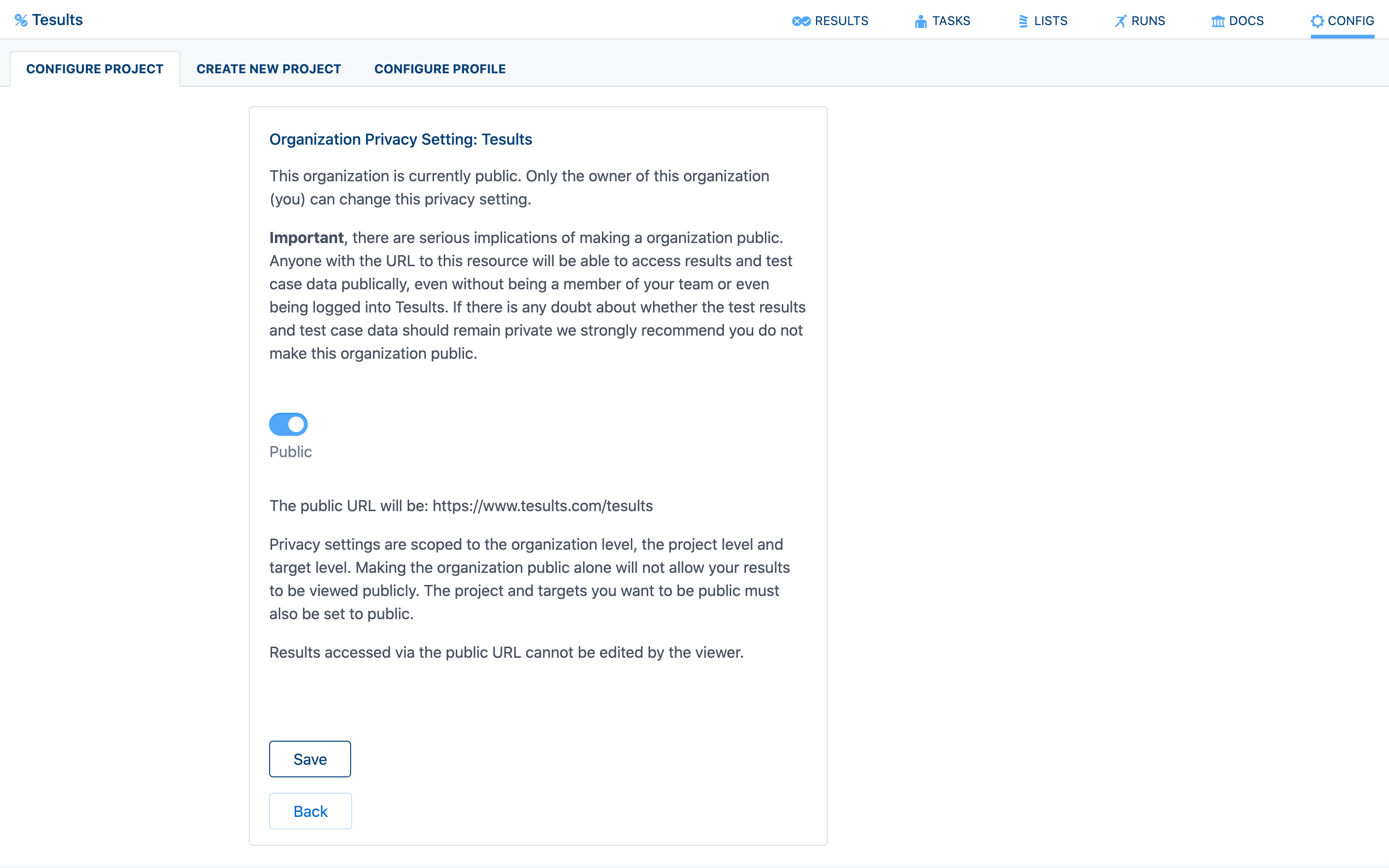 You can enable public access at the organization scope from here. If the organization privacy setting is not set to public, no matter what your project and targets are set to, the results data will not be public. Organization scope privacy supersedes project and target scopes. Next go back to the configuration menu and select Project Privacy.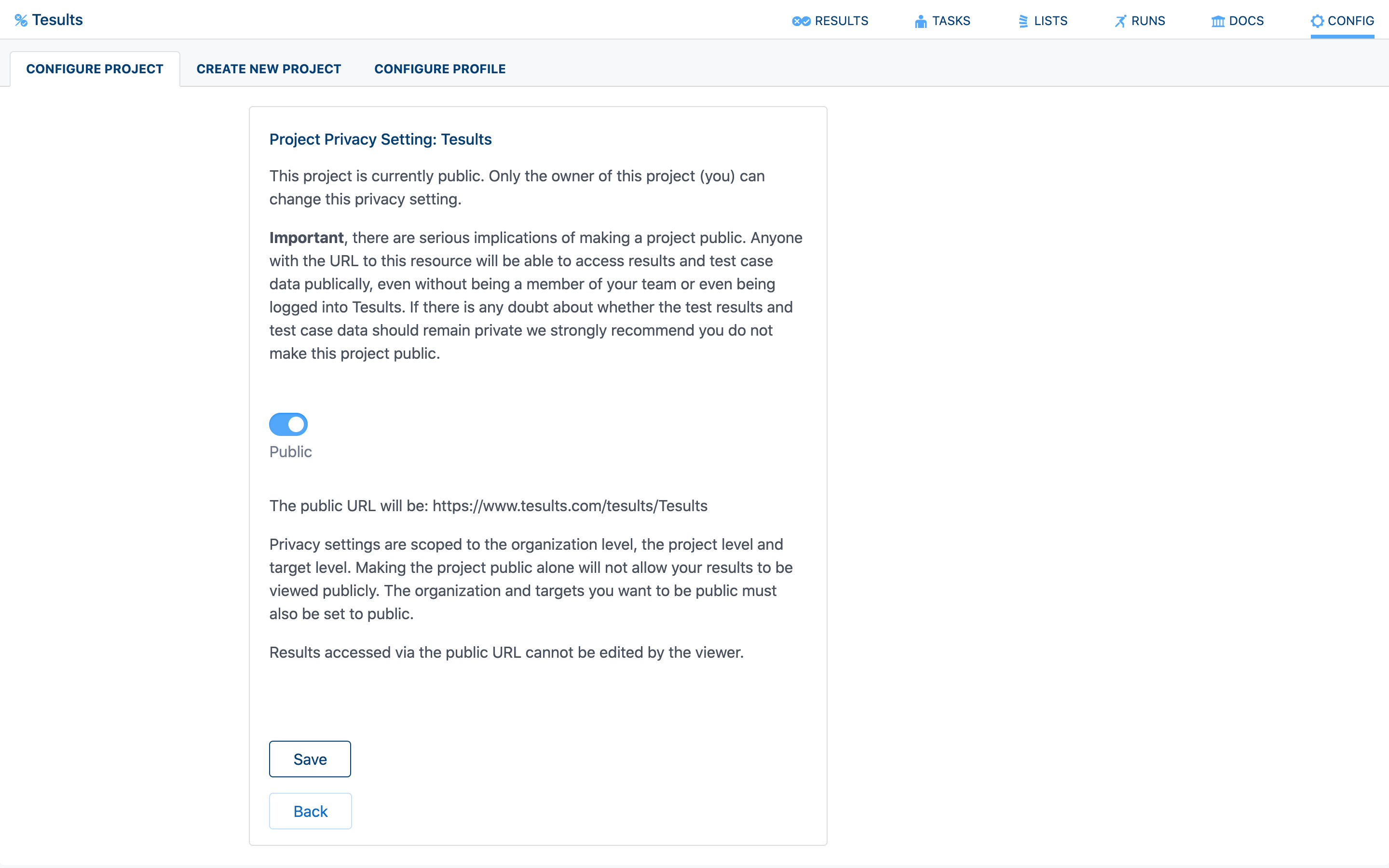
Enable public at the project scope. Now go back to the configuration menu and select the target or targets you wish to make public.
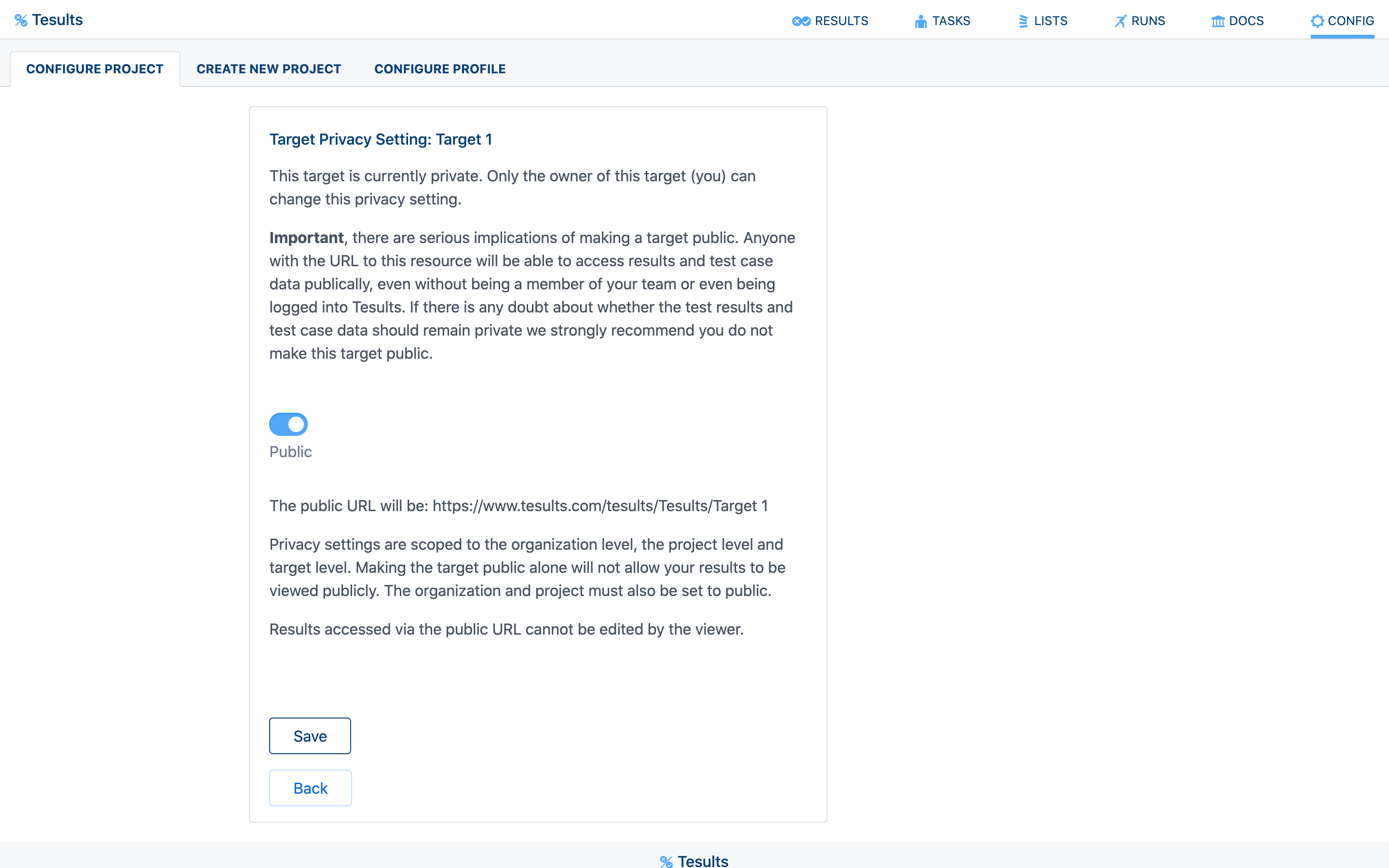
Now enable public for the target for which you wish to make test results public.
At this point, with the organization, project and target scope all set to public, you can view results publicly. The URL is dependent on the name of your organization, project and target, the format is https://www.tesults.com/organization/project/target. For example, if your organization is called a, your project is called b, and your target is named c, then you would access results at https://www.tesults.com/a/b/c.
You do not need to make all of your targets public. You can choose to keep other targets private
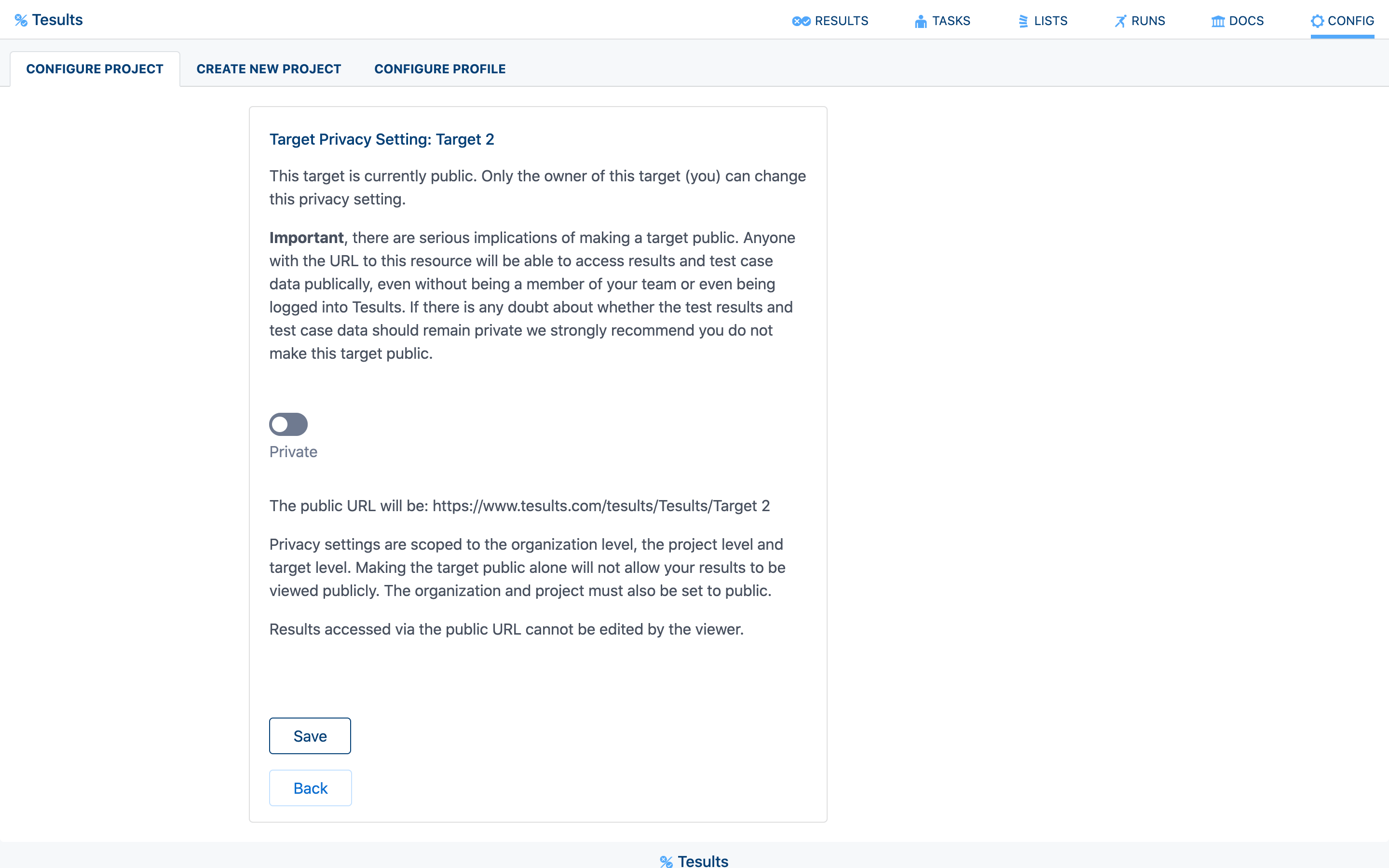
Organization scope supersedes project scope and project scope supersedes target scope. This means that in order for results data to be public you must set all three to public. Your results will not be public if your target is set to public but your organization or project is not public.
This is the first stage to making Tesults publicly available. We are interested in your feedback and questions so please get in touch.
- Tesults Team